
A semi-truck won’t start at the wrong time, and there is rarely a convenient time for it. Whether the issue appears at a shipper, a truck stop, a customer yard, or your own lot, a no-start condition can lead to missed appointments, delayed loads, and expensive downtime. The problem may be as basic as a weak battery connection, or it may point to a starter, alternator, fuel delivery, or engine-control fault that needs professional testing.
For drivers, owner-operators, and fleet managers in Memphis, TN, Olive Branch, MS, and nearby communities, the key is recognizing what the truck is telling you before repeated starting attempts turn a manageable repair into a larger problem. Here are seven common causes and the right next steps.
1. A Semi-Truck Won’t Start Because of Weak or Discharged Batteries
Heavy-duty trucks rely on battery power for far more than cranking the engine. Modern electrical systems, engine control modules, sensors, lights, and accessories all depend on stable voltage. A battery may have enough power to illuminate the dash but still lack the cold-cranking strength needed to turn over a diesel engine.
Common signs of battery trouble include slow cranking, clicking when the key is turned, dim dashboard lights, or a truck that starts only after a jump-start. Corroded terminals, loose cables, poor grounds, and batteries nearing the end of their useful life can all create similar symptoms.
Safe checks drivers can perform
Before calling for service, drivers can safely inspect for visibly loose battery cables, corrosion around terminals, damaged cable insulation, or a battery disconnect switch that is not fully engaged. Turn off unnecessary accessories and check whether interior or exterior lights were left on during downtime.
Do not attempt to service swollen, leaking, cracked, or hot batteries. Avoid placing metal tools across terminals, and do not bypass damaged cables. High-current truck battery systems can cause serious injury and vehicle damage.
2. Starter Motor or Solenoid Problems Can Stop Cranking
If the batteries test well but the engine will not crank, the starter circuit becomes a likely suspect. A worn starter motor, failed solenoid, damaged wiring, or poor ground connection can prevent the engine from turning over.
A single click, repeated clicking, or silence when the ignition is turned can point toward a starter-related problem. In other cases, the starter may engage intermittently, especially after the truck has been operating in high heat. That inconsistency should not be ignored. Intermittent no-start conditions often become complete failures with little warning.
Starter diagnosis requires more than replacing a part based on symptoms alone. A qualified truck technician can test available voltage, voltage drop, wiring condition, grounds, starter draw, and the command signal sent to the starter. This process helps identify whether the starter is actually failing or if another electrical fault is preventing it from operating.
3. Alternator Issues May Have Drained the Starting System
An alternator does not typically prevent the engine from starting immediately. Its role is to recharge the batteries and power electrical components while the engine runs. But when the alternator fails, the batteries may gradually lose their charge until the next start attempt fails.
Warning signs can include a battery or charging-system warning light, dimming lights while driving, fluctuating gauges, electrical accessories cutting out, or repeated dead batteries. If the truck needed a jump-start recently and then dies again after a short period, the charging system needs attention.
A charging-system inspection can determine whether the alternator is producing the correct voltage and whether cables, belts, connections, or battery condition are contributing to the problem. Replacing batteries without checking the alternator may only delay another breakdown.
4. Electrical Faults Can Interrupt Critical Starting Signals
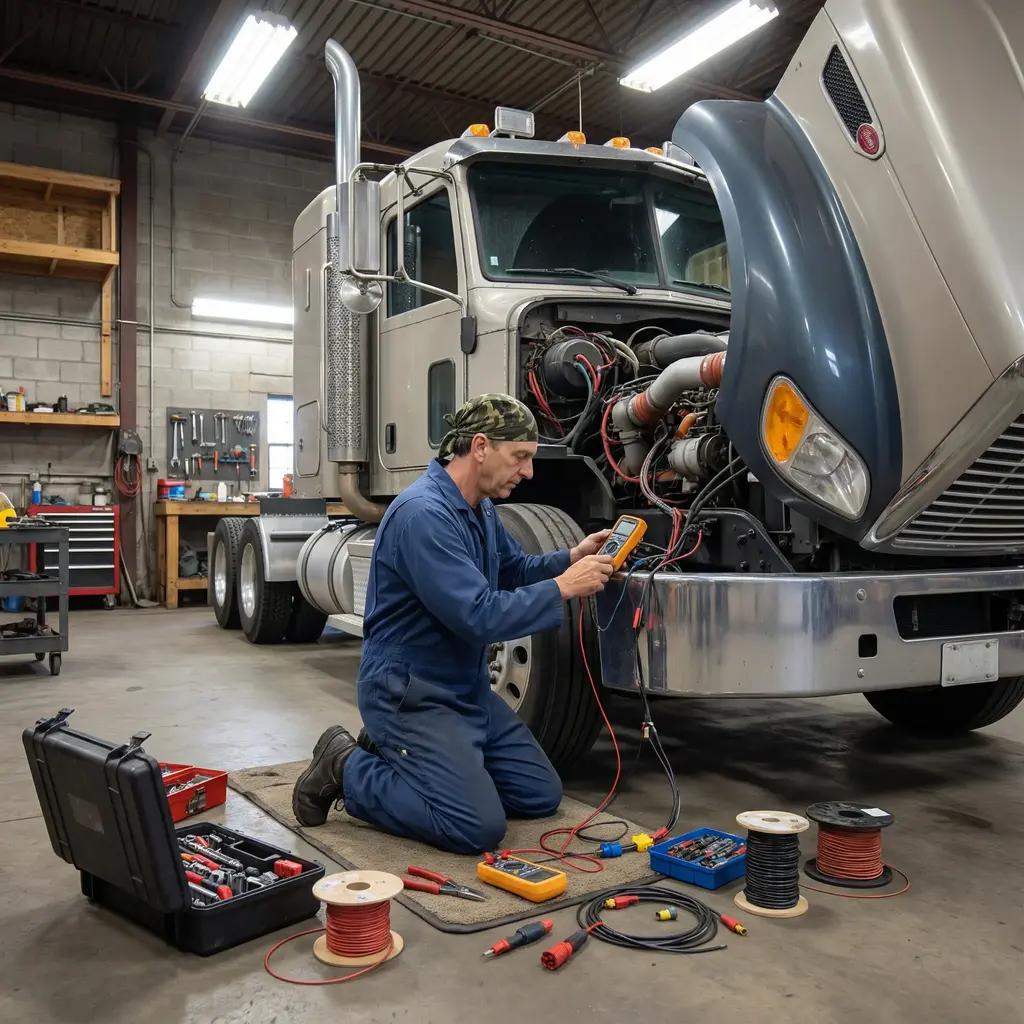
Commercial trucks contain multiple electrical circuits and control modules that work together during the starting sequence. Faults in wiring, relays, fuses, ignition components, safety interlocks, grounds, or electronic controls can leave a driver with a truck that appears ready to start but will not respond.
A semi-truck won’t start if the starting system does not receive the required signal, even when the batteries and starter are in good condition. In some cases, dash warning lights, fault codes, intermittent instrument issues, or unexplained accessory failures appear before the no-start event.
Why professional diesel diagnostics matter
Electrical faults are often difficult to identify by sight. A technician may need diagnostic equipment to read fault codes, evaluate sensor data, trace circuit voltage, and inspect communication between modules. Guessing at relays or replacing parts one by one can increase downtime and repair costs.
For a truck stranded away from a shop, mobile truck repair may be the practical next step. A mobile technician can assess the truck where it sits and determine whether the issue can be addressed on-site or requires further repair.
5. Fuel Delivery Problems Can Create a Crank-No-Start Condition
When the engine cranks normally but refuses to fire, fuel delivery should be considered. Diesel engines need proper fuel pressure and clean, air-free fuel flow to start and run correctly. Restricted fuel filters, contaminated fuel, air leaks, low fuel levels, damaged fuel lines, or a failing lift pump may affect starting.
Cold weather can make fuel-related problems more obvious, but they can occur in any season. Water contamination, sediment, and neglected filter changes can all interfere with fuel flow. A truck that starts briefly and stalls, cranks for an extended period, or loses power before failing to restart may have a fuel system issue.
Drivers should avoid repeatedly cranking the engine for long periods. Excessive cranking drains batteries and can make diagnosis harder. Fuel systems on modern diesel trucks operate under conditions that require proper procedures and equipment. Leave fuel-pressure testing, injector-related work, and system bleeding to trained truck technicians.
6. Engine Sensors and Air-System Concerns May Be Involved
A diesel engine depends on accurate information from sensors and control components. Problems involving crankshaft position sensors, camshaft sensors, temperature sensors, air intake components, or engine control systems may trigger a no-start condition.
Symptoms can vary. The truck may crank strongly but fail to start, start and immediately shut down, run rough before stalling, or display an engine warning light. A fault code may offer a useful direction, but it is not always a final diagnosis. Wiring damage, connector issues, or a related mechanical problem can produce similar codes.
For safety-critical systems and engine-related concerns, professional diesel diagnostics are the right course. A trained technician can separate a sensor failure from a wiring problem, fuel concern, or mechanical issue before unnecessary parts are installed.
7. Mechanical Engine Problems Need Prompt Attention
Less common but more serious no-start causes include internal engine damage, compression issues, timing-related concerns, or severe overheating damage. If the truck stopped abruptly while driving, has unusual engine noises, has visible fluid loss, or will not rotate normally, stop trying to start it.
Continued attempts can cause added damage. Have the vehicle assessed by a qualified commercial truck repair professional who can determine the safest next step.
What to Do Before Calling for Mobile Truck Repair
A few details can help a technician diagnose the problem faster:
- Note whether the engine cranks, clicks, turns slowly, or does nothing.
- Record dashboard warning lights and fault messages.
- Consider what happened before the no-start condition, such as hard starting, low voltage warnings, power loss, overheating, or recent repairs.
- Check the fuel level and look for visible leaks, damaged cables, or loose battery connections.
- Share the truck’s make, model, engine, location, and any recent service history when requesting help.
Avoid jump-starting a truck if batteries are damaged or if you are unsure about the procedure. Do not use improvised wiring repairs, bypass safety systems, or attempt work around moving engine components.
Preventing Future Truck Starting Problems
A proactive fleet maintenance plan can reduce unexpected no-start events. Battery and charging-system checks should be part of regular service, especially before seasonal temperature changes. Inspect battery terminals, grounds, cables, and hold-downs for corrosion, looseness, and damage.
Replace fuel filters on schedule, use clean fuel-handling practices, and address warning lights before they become roadside problems. If a truck begins cranking slowly, needs frequent jump-starts, shows charging warnings, or has intermittent electrical issues, schedule service early. Small symptoms often provide the best opportunity to avoid a larger breakdown.
For fleets, tracking repeat battery failures, starter replacements, charging-system repairs, and recurring fault codes can reveal patterns across vehicles. That information helps maintenance teams plan repairs before a truck is sidelined during a delivery.