A diesel truck derate can quickly disrupt a route, delay a delivery, and leave a driver facing reduced power at the worst possible moment. Semi-truck derate repair starts with identifying why the engine control system has limited performance, not simply clearing a warning light and hoping it stays off.
Derates are often connected to emissions and aftertreatment concerns, including the diesel particulate filter (DPF), diesel exhaust fluid (DEF) system, selective catalytic reduction (SCR) system, sensors, wiring, or engine operating conditions. Drivers and fleet managers in Memphis, TN, Olive Branch, MS, and nearby areas of Tennessee, Mississippi, and Arkansas need an accurate diagnosis before the condition becomes more severe.
What Is a Diesel Engine Derate?
A diesel engine derate is a protective action taken by the truck’s engine control module. When the system detects a fault or operating condition that could affect emissions compliance, engine reliability, or safe vehicle performance, it may reduce available horsepower, torque, speed, or all three.
A derate is not a single failure. It is the truck’s response to an underlying issue. The truck may still move, but it may accelerate slowly, struggle under a load, lose pulling power on grades, or be limited to a lower speed. In some situations, warnings may progress until the truck cannot operate normally.
The purpose of a derate is to encourage prompt service before damage, emissions-system trouble, or a complete operational interruption occurs. It should be treated as a real maintenance priority.
1. Understand the Warning Signs Before the Derate Gets Worse
The first sign may be a check engine light, an emissions-system message, or a dashboard notice indicating reduced engine power. Some trucks also display fault codes, warning lamps, DEF-related messages, or a countdown tied to engine performance limits.
Common signs include:
- Noticeable loss of acceleration or pulling power
- Reduced speed or torque
- Check engine, stop-engine, or emissions warning lights
- DPF, DEF, SCR, or regeneration-related messages
- Increased fuel consumption
- Trouble completing or maintaining a regeneration
- Rough operation, hard starts, or inconsistent engine response
- Warning messages that return after being cleared
A semi-truck derate repair situation should be addressed early, particularly if the truck is losing more power over time. A warning that seems manageable at first can progress into a more restrictive operating condition.
2. DPF Restrictions and Regeneration Issues May Trigger a Derate
The DPF captures soot produced during diesel engine operation. Over time, the system must remove accumulated soot through regeneration. When regeneration does not occur correctly, soot levels may increase and trigger warnings, reduced power, or a derate.
A DPF concern may stem from interrupted regenerations, excessive idling, short-trip operation, faulty temperature or pressure sensors, exhaust leaks, wiring concerns, or an engine condition that produces too much soot. The filter itself may be restricted, but it is important not to assume that is the only issue.
A semi-truck derate repair plan should identify why the DPF reached a warning condition. Simply forcing a regeneration without investigating related fault codes may not resolve the cause. If a sensor is reporting incorrect data, a wiring connection is damaged, or the engine has another performance issue, the warning may return.
Why DPF diagnostics matter
Qualified technicians can review soot-load information, regeneration history, fault codes, exhaust temperatures, differential pressure readings, and sensor data. This helps determine whether the truck needs further inspection, regeneration-related service, repair of a related component, or another corrective step.
Drivers should not attempt to modify, remove, bypass, or disable emissions controls. These systems are required equipment, and improper changes can create legal, operational, and mechanical problems.
3. DEF and SCR System Faults Can Limit Truck Performance
The DEF and SCR systems work together to reduce nitrogen oxide emissions in diesel exhaust. DEF is injected into the exhaust stream, where it supports the SCR process. A problem with DEF quality, fluid level, delivery, heating, dosing, sensors, wiring, or SCR components can lead to warning lights and a derate.
Possible signs include DEF-system messages, poor countdown warnings, recurring emissions codes, or power reduction without obvious engine noise or driveability issues. Low DEF fluid may be one factor, but filling the tank may not correct a fault involving the DEF pump, injector, heater, tank sensor, wiring, or control module.
This is why semi-truck derate repair requires more than a basic visual check. Diagnostic tools can help technicians compare expected and actual readings, identify active and inactive fault codes, and test components in the DEF and SCR system.
Using only approved diesel exhaust fluid and keeping the DEF system clean can help prevent contamination-related concerns. If the truck has persistent DEF warnings, professional diagnostics are the safest next step.
4. Sensor, Wiring, and Electrical Faults Can Mimic Major Failures
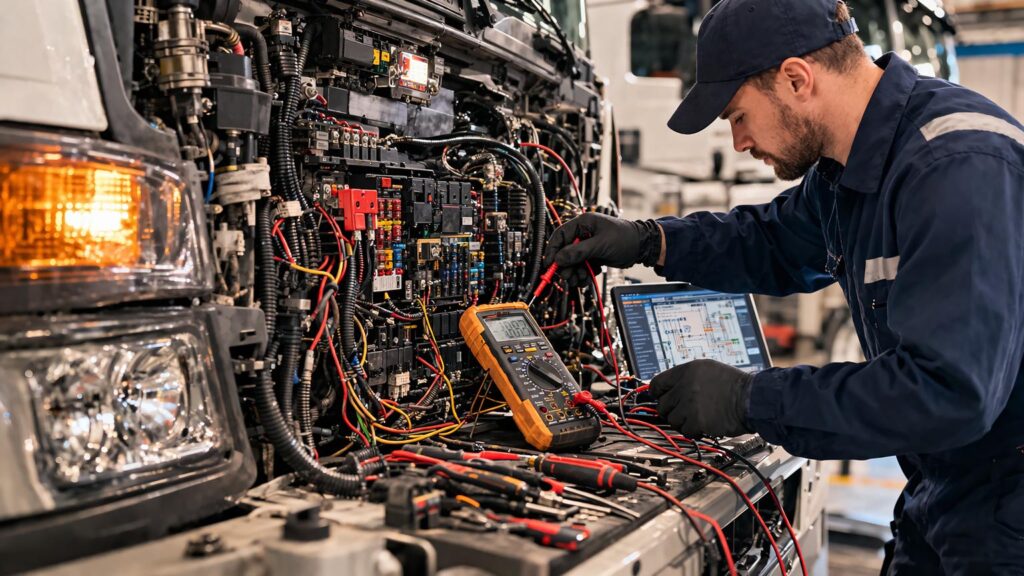
Modern diesel trucks rely on sensors and electronic controls to monitor engine and aftertreatment performance. A failed sensor can trigger a fault, but a damaged connector, corroded terminal, chafed wire, weak battery, poor ground, or charging-system issue can produce similar warnings.
For example, an exhaust temperature sensor may report an implausible reading because the sensor has failed, the circuit has lost continuity, or the connector has water intrusion. Without proper testing, replacing the sensor may not solve the real problem.
Intermittent faults can be especially frustrating. The truck may run normally one day and enter reduced-power mode the next. Vibration, heat, moisture, and road conditions can expose wiring problems that are difficult to spot during a quick inspection.
A semi-truck derate repair provider can use diagnostic equipment and circuit testing to verify fault codes, live data, power supply, grounds, wiring condition, and communication between truck control modules.
5. Engine Problems Can Affect the Aftertreatment System
A derate is often associated with aftertreatment components, but engine-related problems may be part of the story. Fuel delivery concerns, boost leaks, air intake restrictions, injector issues, EGR faults, cooling-system problems, or abnormal combustion can affect emissions output and trigger aftertreatment warnings.
When the engine produces excess soot or cannot reach normal operating conditions, the DPF and SCR systems may struggle to function as intended. An aftertreatment warning can therefore be a symptom of a broader engine-performance issue.
A full semi-truck derate repair diagnosis may include reviewing engine and aftertreatment codes together. This approach helps technicians avoid treating only the warning while missing a fault that caused it.
Why Clearing Fault Codes Is Not a Repair
Clearing a code can remove the dashboard message temporarily, but it does not fix the condition that set the code. If the truck has a damaged sensor, restricted DPF, DEF dosing problem, exhaust leak, or wiring fault, the warning will often return once the system detects the issue again.
Clearing codes may also erase useful information, including fault history and operating details that can help guide diagnosis. When possible, record warning messages and fault codes before service is performed.
If the truck enters a deeper derate, has a stop-engine warning, shows severe power loss, overheats, leaks fluids, or makes unusual mechanical noises, pull over safely and arrange qualified assistance. Do not continue operating solely to complete a delivery.
How Mobile Diesel Diagnostics Help Find the Root Cause
Mobile diesel diagnostics can be useful when a truck is parked at a customer location, terminal, truck stop, or other safe service location. A technician can retrieve fault codes, inspect visible components, review live data, and evaluate whether the truck can be repaired on-site or requires additional shop service.
For semi-truck derate repair, technicians may assess DPF soot levels, regeneration status, DEF and SCR performance, exhaust-temperature data, pressure readings, sensor values, wiring, batteries, and engine-related faults. The exact process depends on the truck, engine, warning messages, and symptoms.
When requesting help, provide the truck’s make, model, engine information if available, location, dashboard warnings, fault codes, recent repairs, and any changes in performance. Those details give the technician a stronger starting point.
Preventing Recurring Derate Warnings
Regular maintenance lowers the chance of avoidable aftertreatment faults. Follow the manufacturer’s service intervals for oil, filters, fuel system service, and emissions-related inspections. Address check engine lights and regeneration warnings early rather than waiting for a performance limit.
Drivers can also reduce problems by using proper DEF, avoiding contamination, monitoring warning messages, and reporting recurring faults. Fleet managers should track repeat DPF, SCR, DEF, and sensor-related codes across vehicles. A pattern of recurring warnings may point to a maintenance issue or an unresolved root cause.
Routine inspections should include visible exhaust-system condition, wiring and connector checks, fluid levels, battery and charging health, air intake condition, and signs of fluid leaks. A small concern found during planned maintenance is easier to manage than a derated truck during an active load.