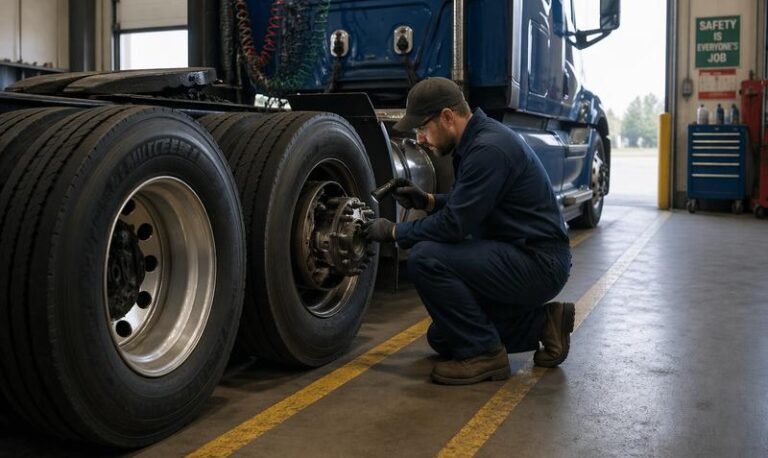
Why Heavy-Duty Truck Maintenance Matters
Regular heavy-duty truck maintenance helps commercial vehicles perform reliably under demanding conditions. Trucks haul heavy loads, travel long distances, operate in changing weather, and often spend extended hours on highways, job sites, and delivery routes. Small problems can develop quickly when they are not found and repaired.
A worn belt, weak battery, low fluid level, air leak, or warning light may seem manageable during a busy workweek. Left unresolved, that same issue can lead to a roadside breakdown, missed delivery, damaged components, or an expensive repair.
For drivers, owner-operators, and fleet managers in Memphis, TN, Olive Branch, MS, and nearby communities, a consistent maintenance plan is one of the most practical ways to reduce unexpected downtime. These nine tips cover the main systems that deserve regular attention.
1. Check Engine Oil and Essential Fluids
Engine oil protects moving components, helps control temperature, and carries contaminants toward the filter. Low, contaminated, or incorrect oil can contribute to premature wear and engine damage.
Inspect the oil level according to the truck manufacturer’s instructions. Look for changes in oil appearance, unusual consumption, leaks around the engine, and signs of coolant contamination. Oil service intervals should follow the engine and vehicle manufacturer’s recommendations, along with the truck’s operating conditions.
Other fluids also deserve regular checks, including:
- Coolant
- Power steering fluid
- Transmission fluid
- Differential lubricant
- Windshield washer fluid
- Diesel exhaust fluid, where applicable
Fluid levels alone do not tell the full story. A truck that repeatedly loses coolant, oil, or another fluid needs professional inspection. Leaks often indicate a failing seal, hose, fitting, radiator, pump, or other component.
2. Inspect Batteries, Cables, and Starting Components
Battery and electrical problems are common causes of commercial truck downtime. A truck may have enough power to illuminate the dashboard but not enough to crank a diesel engine.
As part of routine heavy-duty truck maintenance, inspect battery terminals, cables, grounds, hold-downs, and visible wiring. Corrosion, loose connections, damaged insulation, and weak grounds can create hard-starting problems or intermittent electrical faults.
Drivers should report slow cranking, repeated jump-starts, clicking sounds, dim lights, or charging-system warnings. Fleet managers can reduce surprises by including battery and charging tests in scheduled service, especially before extreme seasonal temperatures.
Do not handle cracked, leaking, swollen, or hot batteries. Electrical systems on heavy-duty trucks can deliver enough current to cause serious injury or damage. A qualified technician should test batteries, alternators, starters, cables, and voltage drop when starting problems appear.
3. Maintain the Brake and Air Systems
Brake systems require close attention because they directly affect vehicle control and road safety. Air brake maintenance should include inspections of air lines, fittings, tanks, valves, compressors, brake chambers, hoses, and related components.
Drivers should monitor air pressure gauges during pre-trip inspections and watch for:
- Slow pressure buildup
- Low-air warning lights or alarms
- Hissing sounds
- Pressure loss while parked
- Parking brakes that do not release correctly
- Changes in brake response
- Damaged or hanging air lines
A truck with unsafe air pressure or brake operation should not be driven. Do not bypass warning systems, make improvised air-line repairs, or work beneath an unsupported vehicle.
Maddiso Inc. can help commercial vehicle owners discuss [truck brake and air system repair]( [Truck Brake & Air System Repair URL] ). Replace the placeholder formatting with the correct page link before publishing.
4. Inspect Cooling System Components and Belts
A diesel engine creates substantial heat, especially under heavy loads, during long grades, and in hot weather. The cooling system must circulate coolant and move air through the radiator to control engine temperature.
During scheduled service, inspect the radiator, coolant reservoir, hoses, clamps, water pump, fan, fan clutch, belts, and related components. Look for leaks, cracked hoses, loose clamps, damaged radiator fins, belt glazing, fraying, and unusual belt noise.
A rising temperature gauge, coolant odor, steam, repeated coolant loss, or engine derate requires prompt attention. Do not open a radiator cap while the engine is hot. Hot coolant and steam can cause severe burns.
A belt may drive the water pump, fan, alternator, or other accessories. If it slips or breaks, the truck may overheat or lose electrical charging. Belt problems should be inspected and repaired by a qualified technician.
5. Check Tires, Suspension, and Axles

Tires, suspension parts, and axles carry heavy loads and absorb road forces every day. A problem in one of these areas can affect handling, tire wear, braking, and overall vehicle stability.
Before operation, drivers should check tire inflation, tread condition, sidewall damage, valve stems, lug nuts, and signs of irregular wear. Tire pressure should be measured with a suitable gauge rather than estimated by appearance.
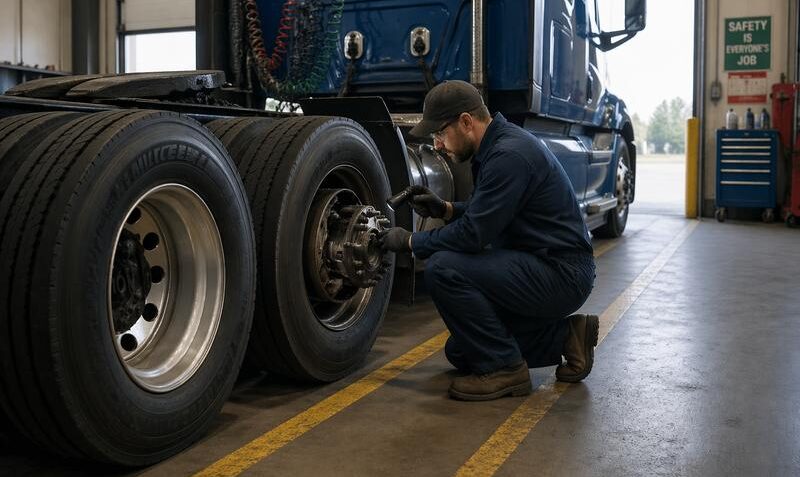
Suspension and axle inspections should include springs, air bags, shocks, bushings, U-bolts, hubs, wheel seals, and visible mounting hardware. Look for uneven ride height, leaning, fluid around wheel ends, unusual vibration, and pulling to one side.
A damaged tire or suspension component should not be ignored. Continuing to operate with a serious defect may damage other parts or create a safety hazard.
6. Use Diesel Diagnostics Before a Small Fault Becomes a Major Repair
Modern trucks rely on electronic control modules, sensors, wiring, and communication networks. A dashboard warning can relate to the engine, fuel system, cooling system, electrical system, or emissions aftertreatment.
Professional diesel diagnostics can retrieve active and stored fault codes, review live data, test circuits, and compare actual readings with expected values. This helps technicians identify the cause instead of replacing parts based only on symptoms.
Warning signs that call for diagnostic attention include:
- Check engine or emissions lights
- Reduced engine power
- Hard starting
- Rough idle
- Poor fuel economy
- Unusual smoke
- Repeated regeneration requests
- Intermittent electrical faults
- Engine or transmission messages
Clearing a code does not repair the problem. If the underlying fault remains, the warning may return or lead to a derate.
For on-site diagnostic support, add an internal link to [mobile diesel diagnostics]( [Mobile Diesel Diagnostics URL] ).
7. Keep the DPF, DEF, and SCR Systems in Good Condition
Diesel aftertreatment systems help reduce emissions and rely on several connected components. The diesel particulate filter captures soot, while the DEF and SCR systems help control nitrogen oxide emissions.
Maintenance involves more than checking DEF level. Technicians may need to inspect sensors, wiring, dosing components, exhaust temperatures, differential pressure readings, and signs of leaks or contamination.
Drivers should respond promptly to DPF, DEF, SCR, and regeneration warnings. Frequent regeneration requests, reduced power, poor engine performance, or a derate may indicate an unresolved fault.
Use the correct diesel exhaust fluid and keep it free from dirt, fuel, oil, and other contaminants. Do not remove, bypass, or disable required emissions equipment. Such changes can create legal, mechanical, and operating problems.
8. Follow a Written Maintenance Schedule
A written schedule gives drivers and fleet managers a consistent way to track inspections, service intervals, repairs, and recurring concerns. It also makes it easier to plan downtime instead of waiting for a component to fail during a delivery.
A maintenance schedule may include:
- Daily or pre-trip inspections
- Oil and filter service
- Brake and air system checks
- Tire and suspension inspections
- Battery and charging tests
- Cooling system inspections
- Diagnostic scans
- DPF and aftertreatment reviews
- Trailer and lighting inspections
Service intervals should reflect the vehicle manufacturer’s recommendations, mileage, engine hours, load, route, climate, and duty cycle. A truck that idles heavily or hauls in severe conditions may need closer attention than one used for lighter highway work.
9. Keep Detailed Maintenance Records
Accurate records help identify patterns before they become expensive failures. Record the date, mileage, engine hours, service performed, parts replaced, fault codes, inspection findings, and follow-up recommendations.
For fleets, these records can reveal repeated battery failures, recurring air leaks, frequent DPF warnings, abnormal tire wear, or one vehicle that needs more attention than others. That information supports better planning and helps technicians understand the truck’s history.
Maintenance records also help drivers communicate clearly when a warning appears. Knowing what was recently repaired can save diagnostic time and prevent duplicated work.
Warning Signs That Need Professional Truck Repair
Some symptoms should move to the top of the repair list:
- Low oil pressure or overheating
- Brake or low-air warnings
- Severe power loss or an engine derate
- Fuel, oil, coolant, or air leaks
- Smoke or burning odors
- Repeated hard starts
- Unusual engine, drivetrain, or wheel-end noise
- Steering, suspension, or tire damage
- Warning lights that return after being cleared
A truck showing a serious warning or unsafe operating condition should be parked in a safe location and inspected by qualified personnel. Do not keep driving simply to finish a route.