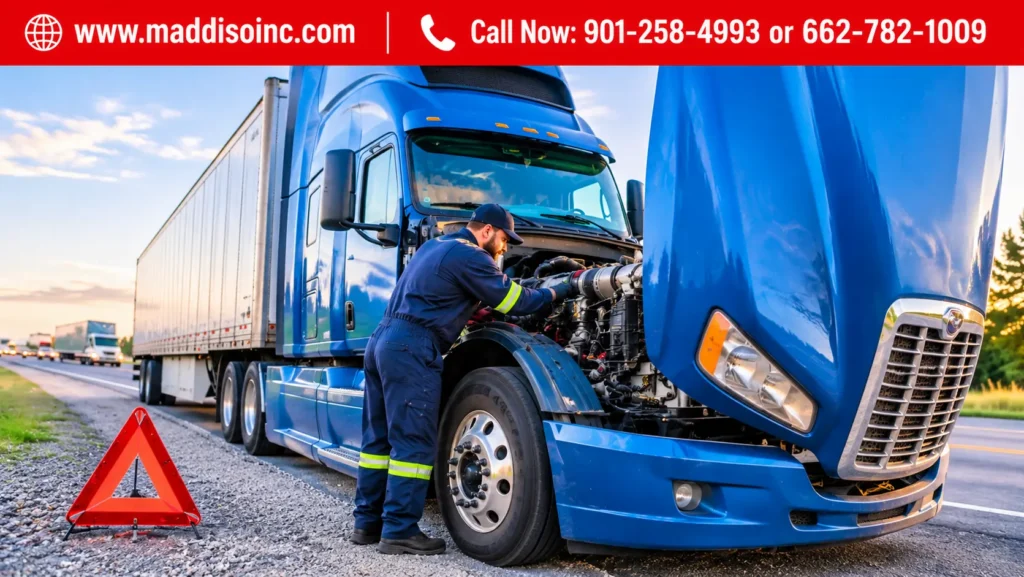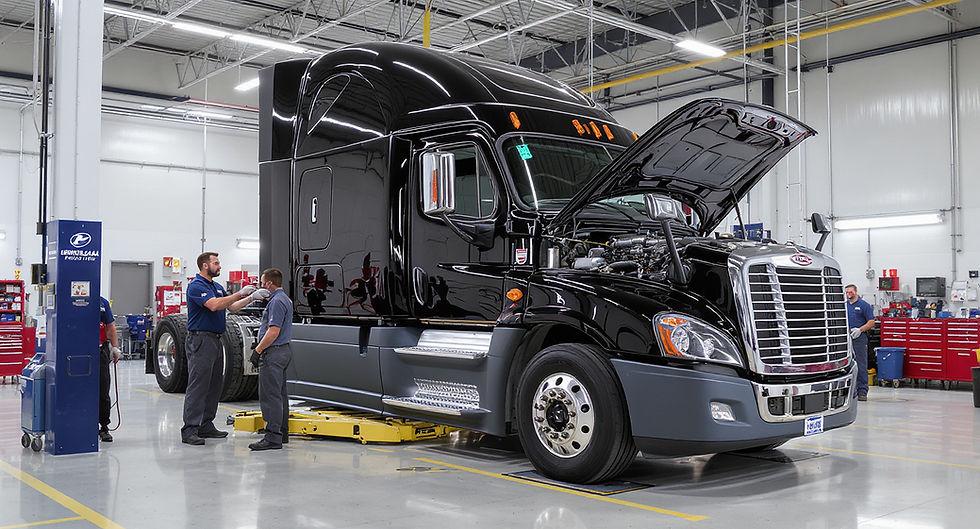
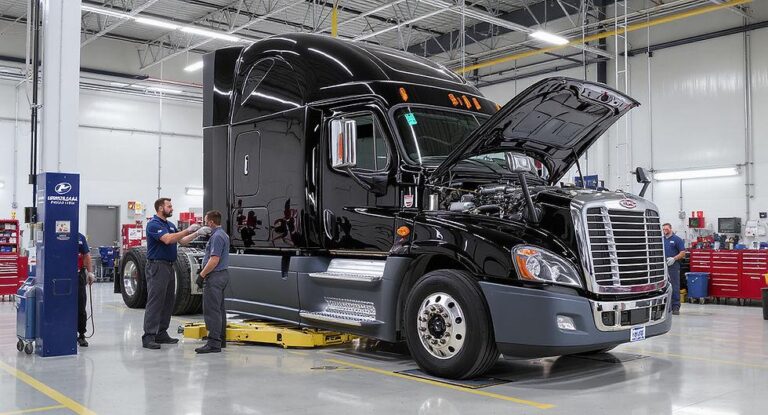
A commercial vehicle problem rarely stays small for long. A worn tire can become a roadside failure. A damaged air line can affect braking. A trailer lighting fault can create a safety concern before the next delivery even begins. Prompt commercial truck and trailer repair helps drivers, owner-operators, and fleet managers address these issues before they interrupt operations.
Trucks and trailers work as a connected unit, but each has its own systems and failure points. The following problems deserve prompt attention in Memphis, TN, Olive Branch, MS, and surrounding communities across Tennessee, Mississippi, and Arkansas.
1. Trailer Brake and Air System Problems
Trailer brakes depend on compressed air, properly operating brake chambers, valves, hoses, and connections. A fault in any of these parts can affect braking performance and create a serious safety risk.
Common signs of a trailer air or brake problem include:
- Low air pressure warnings
- Slow pressure buildup
- Hissing near the trailer or connections
- Air pressure that drops while parked
- Uneven braking
- A trailer that pulls or feels unstable during braking
- Parking brakes that do not release correctly
- Damaged or contaminated glad hands
A brake or air system issue should never be dismissed because the tractor appears to operate normally. The trailer may still have a leaking chamber, damaged hose, faulty relay valve, or another condition that affects the complete combination vehicle.
If a trailer has unsafe brake operation or unstable air pressure, do not drive it. Contact a qualified repair provider for inspection and [trailer brake repair]( [Trailer Brake Repair URL] ).
2. Damaged Air Lines and Air Leaks
Air lines run beneath and around trailers, where they face road debris, vibration, moisture, heat, and contact with suspension components. A cracked hose, loose fitting, worn connection, or damaged line can cause an air leak and reduce system pressure.
Some leaks are obvious. Others are small enough to go unnoticed until the trailer is loaded, the brakes are applied, or the vehicle remains parked for an extended period. A driver may hear a steady hiss, notice slow air pressure buildup, or find that the tractor and trailer lose pressure faster than expected.
During a pre-trip inspection, look for visible hose damage, loose connections, rubbing, cuts, and lines hanging too close to moving parts. Never crawl under an unsupported trailer or attempt to repair a pressurized brake system without the proper training and equipment.
A qualified technician can test the system, find the source of air loss, and inspect related brake components. This is a key part of professional commercial truck and trailer repair.
3. Trailer Electrical and Lighting Failures
Trailer lights support visibility, communication, and legal operation. A failed marker light may seem minor, but lighting problems can affect turn signals, brake lights, clearance lights, reflective visibility, and communication with other drivers.
Common causes include damaged wiring, corroded connectors, loose grounds, broken plugs, blown fuses, water intrusion, and worn light assemblies. Problems may appear after coupling, during wet weather, or when wiring has rubbed against the frame.
Drivers should check all trailer lights before departure, including:
- Head and rear clearance lights
- Brake lights
- Turn signals
- Reflectors and marker lights
- License plate illumination
- Hazard lights
- ABS-related indicators, where applicable
Do not assume a light is defective simply because the bulb is dark. The problem may involve a connector, ground, fuse, harness, or tractor-side electrical circuit. Professional [trailer electrical repair]( [Trailer Electrical Repair URL] ) can help identify the actual fault instead of replacing parts at random.
4. Tire Damage and Irregular Wear
Tires are among the most visible and important parts of a commercial trailer. Low pressure, punctures, sidewall damage, uneven wear, tread separation, and mismatched tires can affect handling, fuel use, braking, and load stability.
A tire problem may develop because of improper inflation, worn suspension components, poor alignment, overloaded axles, road hazards, or a damaged wheel. Heat buildup can make an existing defect worse during long-distance travel.
Before operating the vehicle, inspect tire pressure, tread depth, sidewalls, valve stems, and signs of bulging or exposed cords. Use a suitable tire gauge rather than judging inflation by appearance. Drivers should also look for debris lodged in the tread and signs of contact between the tire and suspension or body components.
A tire with serious damage should not remain in service. If a problem appears during a route, move to a safe location and request qualified roadside or mobile assistance. Repair availability depends on the issue and location.
5. Trailer Suspension Concerns
A trailer suspension supports the load, maintains ride height, and helps keep the vehicle stable. Air bags, leaf springs, shocks, hangers, bushings, torque arms, axles, and mounting hardware all play a role.
Possible signs of suspension trouble include:
- Uneven ride height
- A trailer leaning to one side
- Excessive bouncing
- Abnormal tire wear
- Visible cracks or damaged mounting hardware
- Air suspension that will not hold height
- Unusual noises over rough roads
- Trailer instability during turns or braking
Suspension damage can affect tire life, axle alignment, braking, and cargo protection. It may also place additional strain on the frame and other components. Do not attempt to work beneath an air-suspended trailer without proper support and safe procedures.
A technician can inspect the suspension, axle alignment, air bags, shocks, and mounting points to identify whether the issue requires adjustment, replacement, or more extensive repair.
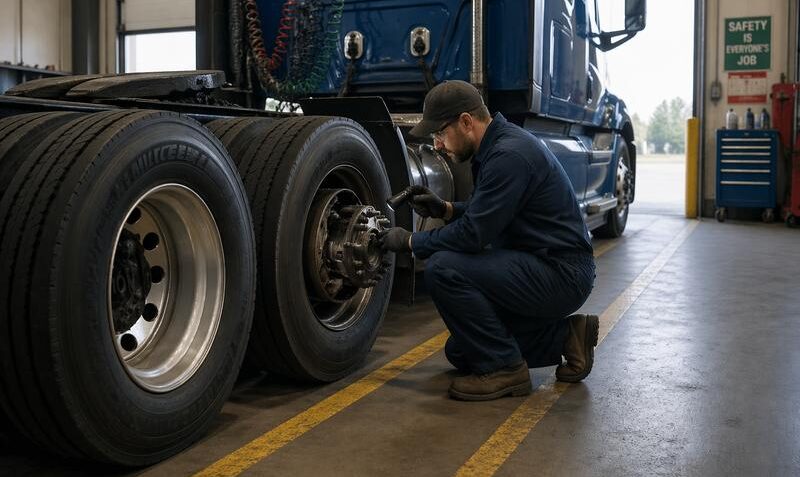
6. Wheel-End and Hub Problems
Wheel-end problems can create heat, noise, vibration, and safety concerns. Worn bearings, damaged seals, low lubricant levels, loose components, and overheated hubs should receive prompt attention.
Drivers may notice grease or oil around a wheel end, an unusual smell, excessive heat, grinding, humming, or vibration. A wheel end that becomes much hotter than the others may indicate a developing problem.
Use caution when checking wheel-end temperature. Components may be hot enough to cause burns. Do not touch suspected overheated parts with bare hands, and do not continue driving if there are signs of severe heat, smoke, or wheel damage.
A trained technician can inspect bearings, seals, hubs, wheels, and related hardware. Early service may prevent damage to the axle and reduce the chance of a roadside failure.
7. Structural and Frame Damage
Trailers experience repeated loading, unloading, twisting, vibration, and exposure to weather. Over time, cracks, corrosion, bent crossmembers, damaged flooring, loose doors, and frame concerns may develop.
Structural problems can affect cargo security and the trailer’s ability to handle normal road forces. Door hardware that does not latch, damaged landing gear, loose hinges, or a compromised floor can also create operational and safety concerns.
Inspect the trailer body, frame, crossmembers, doors, landing gear, rear impact guard, and cargo restraint points. Report damage after a collision, backing incident, loading event, or contact with a dock.
Do not assume cosmetic damage is harmless. A qualified trailer repair technician can determine whether the issue affects structural integrity or safe operation.
8. Tractor-to-Trailer Connection Problems
The connection between tractor and trailer carries air, electrical, and mechanical responsibilities. A problem with the fifth wheel, kingpin, locking jaws, electrical plug, glad hands, or safety equipment can affect the entire combination.
Before departure, confirm that the fifth wheel is properly engaged, the locking mechanism is secure, the trailer is supported correctly, and the air and electrical connections are seated. Check that hoses and cables are routed so they do not drag, stretch, or contact moving parts.
Warning signs include unusual movement between the tractor and trailer, damaged connection components, air leaks near the glad hands, intermittent trailer lights, or difficulty coupling and uncoupling.
Connection faults should be inspected before the vehicle moves. A failure in this area can lead to loss of braking, lighting, or secure attachment.
How Truck and Trailer Problems Affect Operations
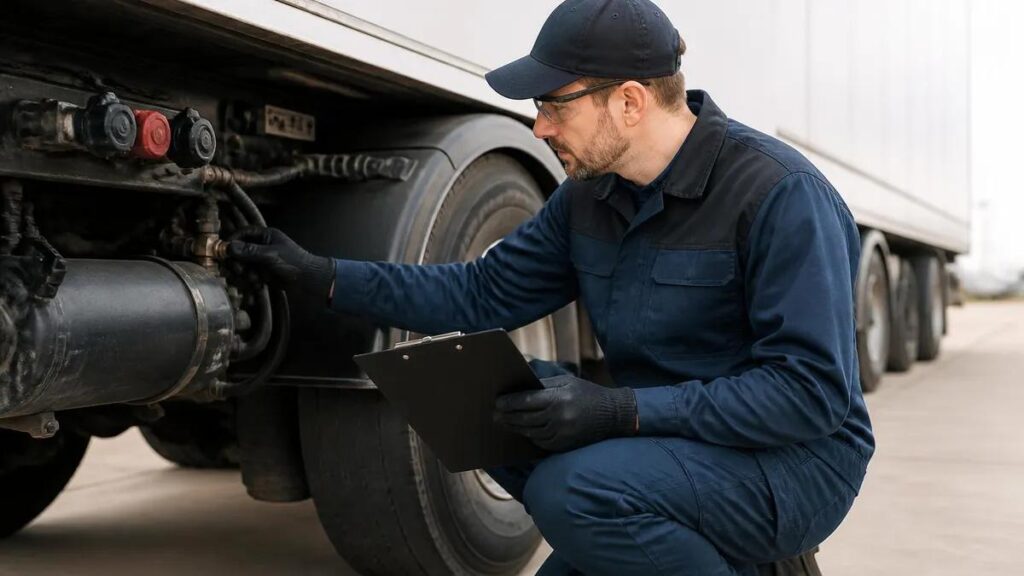
A trailer fault can delay loading, prevent dispatch, create compliance concerns, or leave a driver stranded. It can also damage cargo, increase repair costs, and place other road users at risk.
Fleet managers can reduce interruptions by combining daily driver inspections with scheduled professional service. Tracking repeat problems, repair history, tire wear, air leaks, and electrical faults can reveal patterns across a fleet.
A written inspection process should cover the tractor and trailer together. Repairing only the most visible symptom may not address the underlying cause. For example, repeated tire wear may result from suspension or alignment issues, while recurring lighting failures may point to harness damage or poor grounding.
When Mobile Repair May Be an Option
Mobile truck repair may be useful when a truck or trailer is stopped at a terminal, customer location, truck stop, yard, or roadside location where safe service access is available. A technician can assess the issue and determine whether it can be repaired on-site or requires shop service.
The type of mobile repair available depends on the problem, equipment, location, and safety conditions. Contact Maddiso Inc. with the vehicle’s location, make and model, trailer type, symptoms, warning lights, and any visible damage. Repair availability depends on the issue and location.
Preventive Inspection Tips
Drivers can help identify problems early by performing careful pre-trip and post-trip inspections. Look for air leaks, damaged hoses, low tires, lighting faults, fluid leaks, suspension damage, loose hardware, and unsafe connection points.
Fleet managers should schedule regular inspections of trailer brakes, air systems, wiring, tires, wheel ends, suspension, landing gear, doors, and structural components. Repairs should follow manufacturer requirements and applicable inspection standards.
Do not operate a vehicle with unsafe brakes, severe tire damage, unstable suspension, compromised connections, or other conditions that could affect control. Arrange professional commercial truck and trailer repair before returning the vehicle to service.