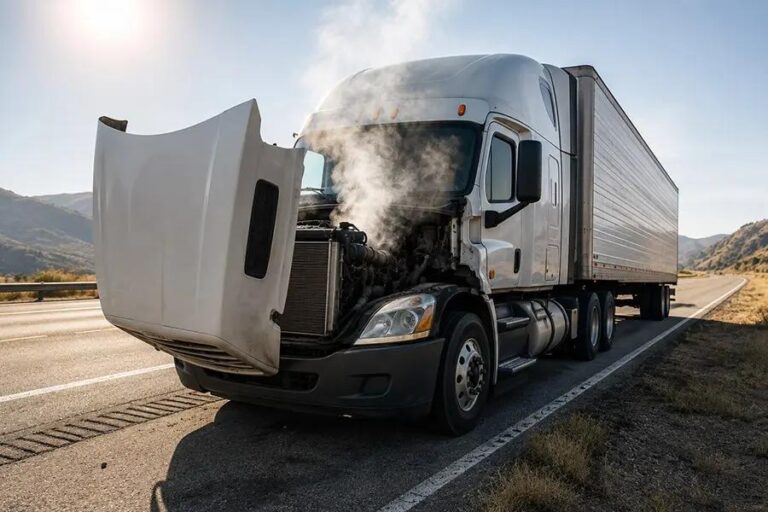
A diesel engine that begins running hot can quickly turn a manageable maintenance issue into costly repairs, unexpected downtime, and major engine damage. Semi-truck overheating repair is essential when a truck’s cooling system fails to maintain a safe operating temperature. Common causes include coolant leaks, a restricted radiator, a damaged serpentine belt, a failed cooling fan, a faulty thermostat, or other cooling system problems. Continuing to drive while the temperature gauge keeps rising can cause severe engine damage, including a blown head gasket or warped cylinder head, especially when hauling heavy loads, driving long distances, or operating in hot weather.
For owner-operators, truck drivers, and fleet managers in Memphis, TN, Olive Branch, MS, and surrounding communities across Tennessee, Mississippi, and Arkansas, knowing how to respond when a truck starts overheating is critical. Ignoring early warning signs, such as rising engine temperatures, coolant loss, steam from under the hood, or unusual engine performance, can make the problem much worse. Timely semi-truck overheating repair helps protect valuable engine components, reduce unexpected repair expenses, and minimize vehicle downtime.
If your semi-truck is overheating, pulling over safely and arranging a professional inspection is the best course of action. An experienced diesel technician can inspect the cooling system, identify the source of excessive heat, and recommend the appropriate repairs. Getting the right semi-truck overheating repair at the first sign of trouble can help prevent a minor cooling system fault from developing into a major engine failure that takes your truck off the road.
1. Recognize the Early Signs of a Semi-Truck Overheating
The temperature gauge is one of the first places to look, but it is not the only warning. A truck may show several signs before the engine reaches a critical temperature.
Common symptoms include:
- A temperature gauge moving above its normal range
- A high-temperature warning light or alarm
- Steam or visible vapor from the engine compartment
- Coolant dripping beneath the truck
- A strong or sweet coolant odor
- Reduced engine power
- An unusual smell from belts, hoses, or engine components
- Cooling fans running more often than usual
- An engine derate or shutdown warning
A rising temperature gauge should never be dismissed as a temporary fluctuation. Pull over in a safe location as soon as conditions allow, turn off the engine, and allow it to cool. If the warning continues or coolant is visibly leaking, the truck needs professional inspection.
2. Low Coolant or a Coolant Leak Can Cause Rapid Overheating
Coolant carries heat away from the engine and transfers it through the radiator. When the coolant level is low, the system may not be able to control engine temperature effectively, increasing the risk of requiring semi-truck overheating repair.
Leaks can occur at the radiator, hoses, water pump, thermostat housing, expansion tank, heater lines, fittings, or other cooling system connections. Some leaks are easy to see, while others may only appear when the engine reaches operating temperature and the cooling system becomes pressurized.
Drivers may notice wet spots, dried coolant residue, a sweet smell, or a drop in the coolant reservoir level. However, the absence of a visible puddle does not rule out a leak. Coolant may evaporate on hot surfaces or leak into areas that are difficult to see from outside the truck.
Never remove a radiator cap or pressure cap while the engine is hot. Hot coolant and steam can cause serious burns. A qualified technician should inspect the system after it has cooled and use appropriate testing procedures to locate the leak.
3. A Blocked or Damaged Radiator May Restrict Heat Transfer
The radiator must release heat from the coolant into the surrounding air. Dirt, insects, mud, road debris, and oil contamination can build up on the radiator or charge-air cooler surfaces and restrict airflow. Bent fins can create a similar problem.
Internal radiator restrictions may also prevent coolant from flowing correctly. Corrosion, contamination, or neglected coolant service can affect the passages inside the radiator. In either case, the engine may overheat more quickly during long grades, heavy hauling, stop-and-go traffic, or hot weather.
A visual inspection can reveal heavy debris or damaged fins, but cleaning a heavy-duty cooling system requires care. High-pressure water directed incorrectly can bend fins or damage components. A truck repair technician can determine whether the radiator needs cleaning, testing, repair, or replacement.
4. Damaged Hoses and Belts Can Interrupt Cooling System Operation
Cooling system hoses carry coolant between the engine, radiator, water pump, and other components. Over time, hoses may become soft, swollen, cracked, hardened, or weakened near clamps and connection points.
A damaged hose can release coolant quickly and cause overheating. Some hoses may collapse internally or restrict flow without showing major external damage. Hoses near hot exhaust components or areas exposed to rubbing deserve close attention.
Belts are just as important. Depending on the truck’s design, a belt may drive the water pump, cooling fan, alternator, or other accessories. A worn, loose, contaminated, or broken belt can stop these components from operating correctly.
Signs of belt trouble may include squealing, visible cracking, frayed edges, glazing, unusual vibration, or a belt that repeatedly slips. Do not reach into the engine compartment while components are moving, and do not attempt to replace a belt near a hot engine without proper training and equipment. Truck belt repair should be handled by a qualified technician.
5. Cooling Fan or Fan Clutch Problems Can Reduce Airflow
The cooling fan moves air through the radiator, particularly when the truck is working hard or traveling at low speed. A failed fan motor, damaged fan blades, faulty fan clutch, wiring problem, or control issue can reduce airflow and cause the engine temperature to rise.
A fan-related problem may be more noticeable during heavy pulling, climbing, idling, or slow traffic. The truck may run at a normal temperature on the highway but overheat under demanding conditions.
Fan problems are not always visible from the cab. A driver may hear an unusual fan noise, notice that the fan engages at unexpected times, or see the temperature climb when airflow demand increases. Since fan assemblies can move suddenly and cause serious injury, do not inspect or handle them while the engine is running.
Professional cooling system diagnostics can test fan operation, controls, wiring, clutch engagement, and related components.
6. Heavy Loads and Operating Conditions Can Expose Cooling Problems
A truck operating near its normal temperature range may begin overheating when conditions become more demanding. Long grades, high ambient temperatures, heavy cargo, stop-and-go traffic, extended idling, and restricted airflow all increase the cooling system’s workload.
These conditions do not necessarily mean the truck is overloaded or being operated incorrectly. They may reveal a problem that was already developing, such as a partially blocked radiator, weak water pump, slipping belt, low coolant level, or malfunctioning fan.
Drivers should monitor the temperature gauge during demanding routes, especially through the Memphis area and surrounding regions where summer heat and traffic can place additional demands on a diesel cooling system. If the temperature rises beyond its normal range, reduce the workload on the engine and find a safe place to stop.
7. Professional Diagnostics Can Prevent Repeat Overheating
Replacing a thermostat or adding coolant may appear to solve the problem, but overheating can return if the underlying cause remains. Professional diagnostics help identify whether the issue involves coolant flow, pressure, airflow, belt drive, fan operation, or internal engine concerns.
A technician may inspect the cooling system for leaks, test pressure, evaluate coolant condition, check belt alignment and tension, inspect the radiator, test the thermostat and water pump, and verify fan operation. Additional testing may be needed if there are signs of combustion gases in the cooling system or possible internal engine damage.
This approach is especially important when a truck has overheated more than once. Repeated overheating can damage cylinder heads, gaskets, turbocharger components, hoses, and other engine parts.
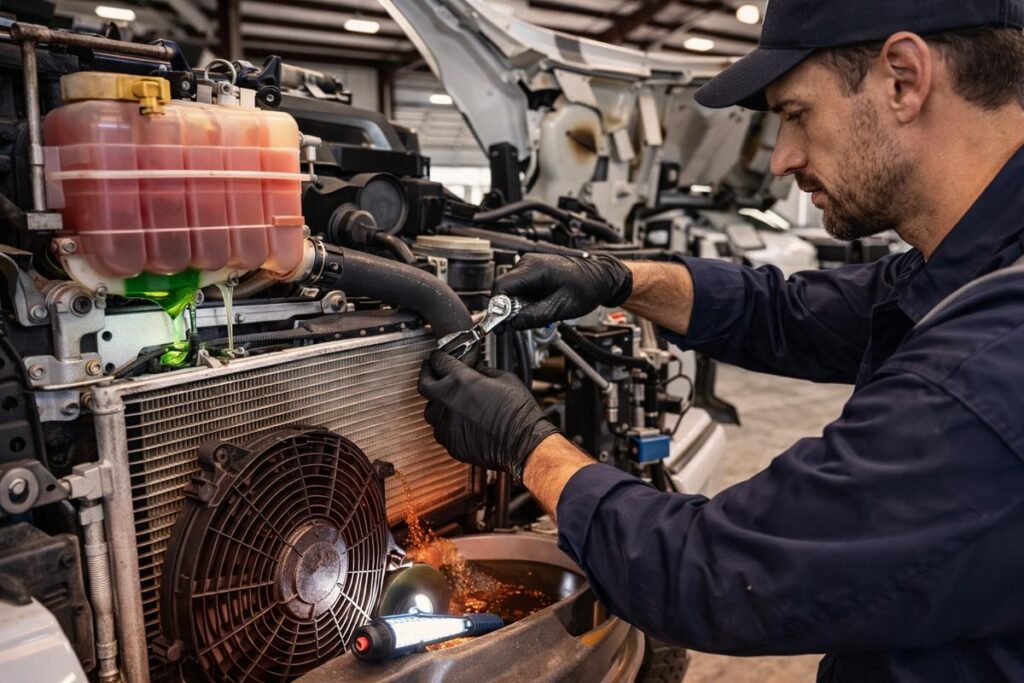
What to Do When a Semi-Truck Starts Overheating
When the temperature rises, safety comes first:
- Reduce engine load and avoid hard acceleration.
- Turn off nonessential accessories if appropriate.
- Pull over in a safe location as soon as possible.
- Shut down the engine if the temperature continues to climb.
- Keep people away from steam, hot coolant, belts, and fans.
- Wait for the engine to cool before any visual inspection.
- Contact a qualified heavy-duty truck repair provider.
Do not open the radiator cap while the engine is hot. Do not pour cold water into a hot engine. Do not continue driving in hopes that the gauge will return to normal. Do not crawl beneath the truck without proper support, and do not attempt roadside repairs around hot or moving components.
Preventive Cooling System Maintenance
Regular cooling system maintenance plays an important role in preventing engine overheating and reducing the need for unexpected semi-truck overheating repair. During scheduled maintenance, qualified technicians should inspect coolant levels and condition, radiator hoses, clamps, radiator surfaces, drive belts, cooling fan components, water pump operation, and any visible signs of leaks. Identifying worn or damaged components early can help prevent cooling system failures before they leave a truck stranded on the road.
Following the truck manufacturer’s recommended coolant service intervals is equally important. Using the wrong coolant or mixing incompatible products can lead to corrosion, mineral deposits, restricted coolant flow, and long-term cooling system damage. Drivers and maintenance teams should also keep the radiator and related heat exchangers clear of heavy dirt, dust, and debris. However, cleaning should be performed carefully using methods that do not bend radiator fins or damage nearby electrical components.
Drivers should report even minor changes in engine performance, including a fluctuating temperature gauge, unexplained coolant loss, unusual belt noise, changes in cooling fan operation, or recurring dashboard warning lights. These symptoms may indicate developing problems that require professional attention. Addressing them early can reduce the risk of expensive semi-truck overheating repair and help keep the engine operating within its recommended temperature range.
For fleet managers, maintaining detailed service records and tracking repeated overheating incidents across vehicles can help identify trucks that require a more thorough inspection. Combining routine maintenance with timely professional semi-truck overheating repair helps extend engine life, minimize unexpected downtime, and maintain reliable fleet operations.